What Are Macros?
Macros, short for macronutrients, are the nutrients your body uses in larger amounts: protein, carbohydrates, and fat. Each macro gives you calories, but they do different jobs in your body.
If you are tracking calories, learning macros helps you understand where those calories come from. A meal can have the same calories but feel very different depending on its protein, carbs, and fat.
How Many Calories Are in Protein, Carbs, and Fat?
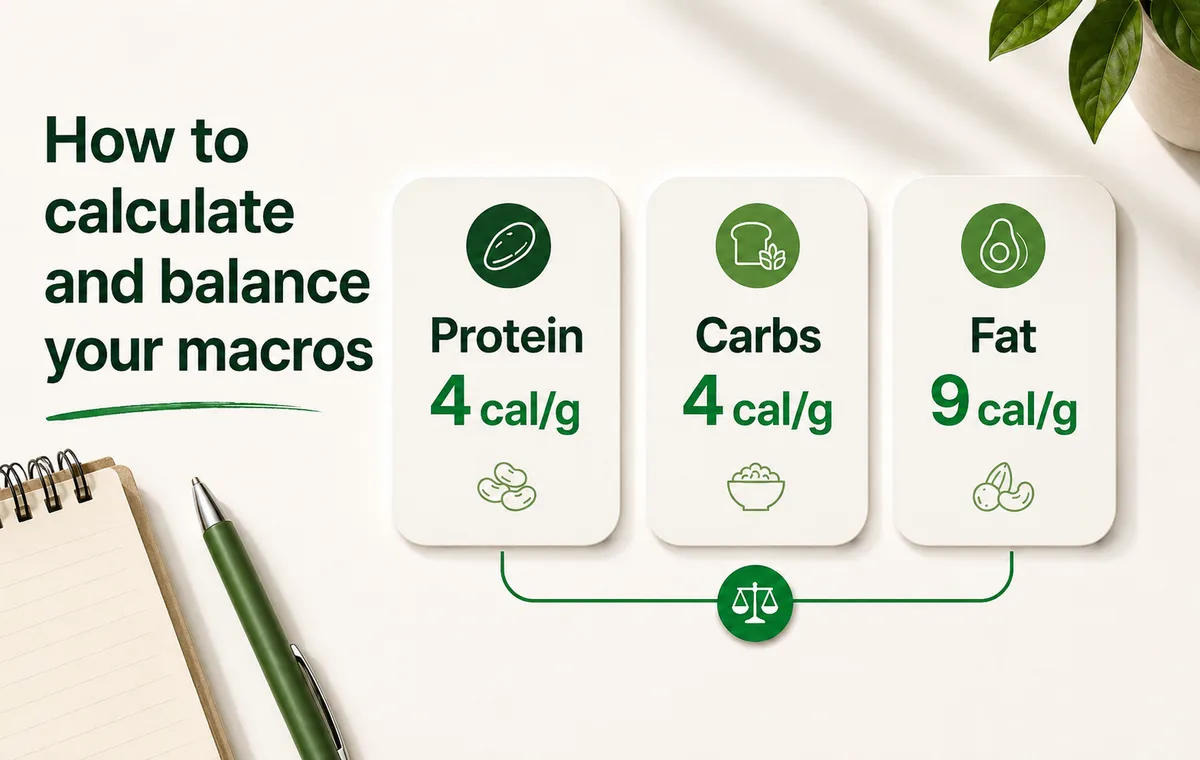
The basic macro math is simple: protein has 4 calories per gram, carbohydrates have 4 calories per gram, and fat has 9 calories per gram. Alcohol has 7 calories per gram, but it is usually tracked separately from the three main macros.
- Protein: 4 calories per gram.
- Carbs: 4 calories per gram.
- Fat: 9 calories per gram.
- Alcohol: 7 calories per gram, if you choose to track it.
That is why fats are easy to undercount. One spoon of oil can add more calories than people expect, even though fat itself is not bad.
How to Calculate Macro Calories
To calculate calories from macros, multiply the grams by the calories per gram.
- Protein calories = protein grams x 4.
- Carb calories = carb grams x 4.
- Fat calories = fat grams x 9.
For example, a meal with 30g protein, 50g carbs, and 15g fat has about 120 calories from protein, 200 calories from carbs, and 135 calories from fat. That is about 455 calories before any rounding or hidden ingredients.
What Is a Good Macro Balance?
There is no perfect macro split for everyone. A useful balance usually includes enough protein to support fullness and muscle maintenance, enough carbs for energy, and enough fat for taste, satisfaction, and normal body functions.
For a normal meal, a simple starting point is: include a protein source, add a carb source if it fits your day, include vegetables or fruit when possible, and track fats like oil, dressing, nuts, cheese, or creamy sauces honestly.
If you are also working on weight loss, consistency matters more than chasing a perfect macro split every day.
Simple Macro Balance Examples
- Breakfast: yoghurt, fruit, oats, and a small handful of nuts.
- Lunch: chicken or tofu bowl with rice, vegetables, and one spoon of dressing.
- Snack: fruit with yoghurt, cottage cheese, or a small handful of nuts.
- Dinner: fish, beans, tofu, or lean meat with potatoes, pasta, rice, or bread plus vegetables.
You do not need to weigh every ingredient to start. Use portion words like bowl, cup, plate, spoon, or handful, then get more precise only when you need to.
When Should You Track Macros?
Macro tracking is useful if you want to improve protein intake, understand why some meals keep you full longer, support training goals, or troubleshoot a calorie target that does not feel sustainable.
You do not need to track macros forever. Many people start by tracking calories, then look at macros when they want more detail.
How LogCal AI Can Help
LogCal AI can estimate calories and macros from text, voice, or photos. That means you can log a meal in normal language and still get a useful breakdown of protein, carbs, and fat.
Start simple. Track the meal, notice the pattern, and use macros as extra context instead of another thing to stress about.
FAQ
What are macros in food?
Macros are protein, carbohydrates, and fat. They provide calories and each plays a different role in meals and nutrition.
How many calories are in each macro?
Protein has 4 calories per gram, carbs have 4 calories per gram, and fat has 9 calories per gram. Alcohol has 7 calories per gram.
Do I need to track macros to lose weight?
Not always. Calories and consistency matter most for many people. Macro tracking can help if you want to improve protein intake, manage hunger, or understand your meals better.
What is the best macro balance?
There is no single best macro balance for everyone. A practical approach is to include protein, choose carbs that fit your day, and track calorie-dense fats honestly.
Make meal logging easier
LogCal AI lets you track meals with text, voice, or photos, so calorie tracking can fit into real life.