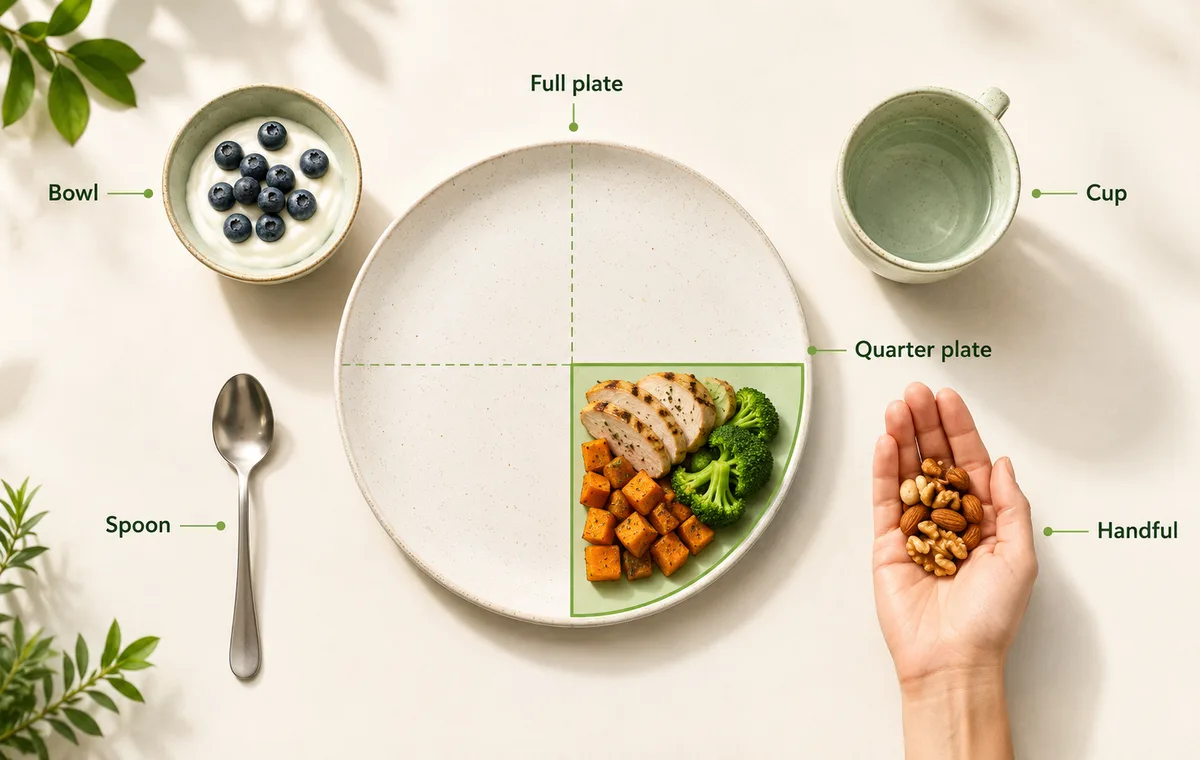
The Simple Way to Estimate Portion Sizes
To estimate portion sizes without a food scale, use everyday measures: plate, bowl, cup, spoon, and small handful. These will not be perfect, but they give you enough detail to track calories more consistently.
This method works especially well if you are learning how to track calories without weighing food and want a system that fits normal meals.
Portion Size Cheat Sheet
- Regular plate: useful for full meals with a protein, carb, and vegetables.
- Small plate: useful for snacks, desserts, or lighter meals.
- Bowl: useful for soups, pasta, rice bowls, oats, yoghurt, and mixed meals.
- Cup: useful for cooked grains, cereal, fruit, milk, or yoghurt.
- Spoon: useful for oils, dressings, sauces, butter, nut butter, and dips.
- Small handful: useful for nuts, chips, crackers, berries, and snack foods.
How to Use the Plate Method
The plate method is a quick visual check. For many balanced meals, about half the plate is lighter foods like vegetables or salad, one smaller section is protein, and one smaller section is carbs. Oils, dressings, cheese, creamy sauces, and nuts should be logged separately because small amounts can matter.
For example: regular plate with grilled fish, potatoes, vegetables, and one spoon of olive oil. That is much more useful than logging "dinner".
Examples of Better Portion Logs
- Instead of "breakfast": one bowl of oats, one cup milk, one banana, one spoon peanut butter.
- Instead of "salad": large plate salad, one serving chicken, half cup grains, two spoons dressing.
- Instead of "snack": small handful nuts and one piece of fruit.
- Instead of "pasta": regular bowl pasta with vegetables, protein, and two spoons creamy sauce.
If you log with LogCal AI, these everyday portion words are enough to make the estimate more useful. You can type them, say them by voice, or add them after uploading a meal photo.
When to Be More Exact
Portion estimates are useful for everyday tracking, but they are still estimates. If you have a medical condition, strict nutrition target, or detailed sports goal, a food scale or professional guidance may be better.
For weight loss, consistency often matters more than perfect numbers. The best way to track calories is the one you can repeat for weeks, not just for one perfect day.
FAQ
Can I estimate portion sizes accurately?
You can estimate portions well enough for everyday awareness, but it will not be as precise as weighing food. Use the same portion words consistently so your logs are easier to compare.
What portion words should I use?
Use simple words like regular plate, small bowl, one cup, one spoon, or small handful. Add food details and calorie-dense extras such as oil, dressing, sauces, cheese, or nuts.
Should I use a plate method for every meal?
No. The plate method is a quick guide for mixed meals. Bowls, sandwiches, snacks, and desserts may need different portion descriptions.
Make meal logging easier
LogCal AI lets you track meals with text, voice, or photos, so calorie tracking can fit into real life.