Can You Track Calories Without a Food Scale?
You can track calories without weighing food by using portion estimates, repeat meals, photos, and quick meal logs. It will not be as exact as weighing every ingredient, but it can be accurate enough to understand your eating patterns and make better choices.
A food scale gives more precision, especially if you are tracking macros closely or following a strict nutrition plan. But many people do not need perfect numbers every day. They need a realistic system they can actually follow.
- You may notice your snacks add more calories than expected.
- You may realise your lunch is lighter than your dinner.
- You may see that weekend meals are harder to track.
- You may find that drinks, dressings, or cooking oils are easy to forget.
Why Weighing Every Meal Is Hard to Stick With
Weighing food can work well at home, but real life gets messy. You may eat at restaurants, order takeaway, cook family-style meals, or have homemade food where no one measured every ingredient.
That is why many people stop calorie tracking. The process feels too detailed, so they give up completely.
How to Track Calories Without Weighing Food
Here are practical ways to track calories without weighing food.
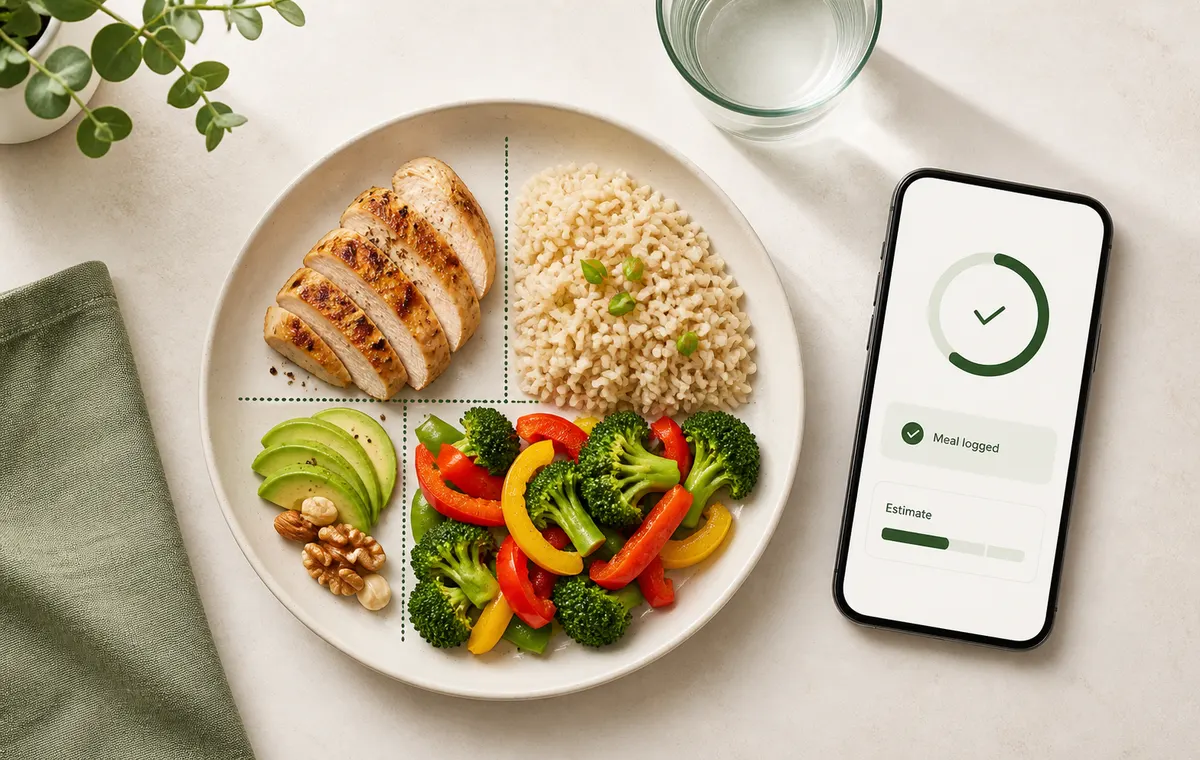
Use the plate method for quick estimates
Think of your plate like a simple map, not a strict rule. For a balanced meal, roughly half the plate is lighter foods like vegetables or salad, one smaller section is protein, one smaller section is carbs, and any oil, dressing, cheese, nuts, or creamy sauce is counted separately. If you want a deeper guide, start with these simple portion size estimates.
For example, if you eat a rice bowl with chicken or tofu, vegetables, yoghurt, and olive oil, you can log it as: one smaller section rice, one smaller section protein, half plate vegetables, small bowl yoghurt, and one spoon oil. It is still an estimate, but it is much clearer than just writing "lunch".
Use simple portion sizes
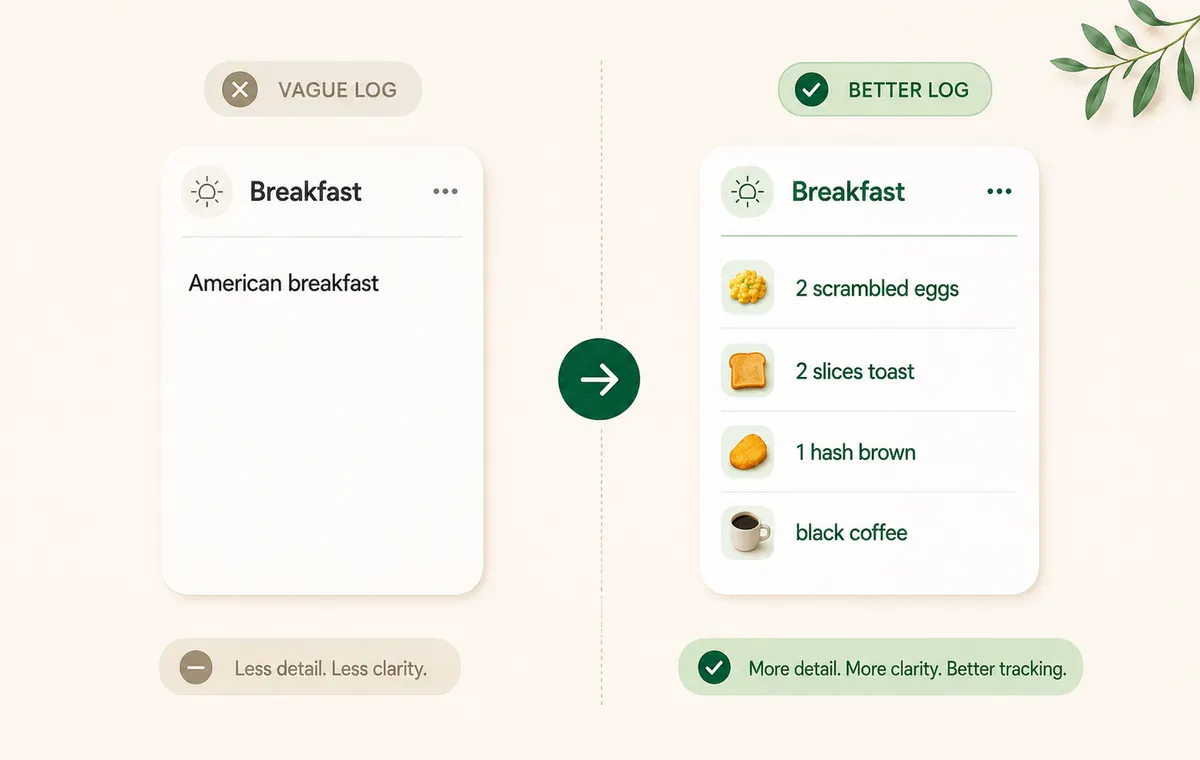
Instead of guessing in grams, describe portions in everyday terms. A good log is less about perfect measurement and more about giving enough context for a realistic estimate.
- Plate: useful for full meals, such as a small plate, regular plate, or large plate.
- Bowl: useful for foods like rice, pasta, oats, soup, yoghurt, or mixed meals.
- Cup: useful for cooked grains, cereal, fruit, milk, or yoghurt.
- Spoon: useful for oil, butter, dressing, nut butter, sauces, or dips.
- Small handful: useful for nuts, chips, crackers, berries, or other snacks.
For example, "one regular plate of pasta with chicken, vegetables, and two spoons of creamy sauce" is much clearer than "pasta". The same idea works for a sandwich, soup bowl, salad, rice bowl, or takeaway meal.
Repeat simple meals during the week
You do not need to eat the same thing every day, but repeat meals make calorie tracking easier. Once you estimate a meal a few times, you start to understand its usual calorie range.
Take photos before you eat
A quick meal photo can help you remember portions later, especially when you are eating out, travelling, or too busy to log immediately. Photo calorie tracking works best when the picture shows the full plate and you add a few details.
Log meals right away
Grilled chicken, one cup of rice, roasted vegetables, yoghurt, and one spoon of olive oil.
That kind of detail is much better than trying to remember everything at night. If typing feels slow, LogCal AI lets you log meals by voice, text, or photo, so you can capture the meal while it is still fresh in your mind.
Estimate cooking oils, sauces, and extras
The main meal is usually easier to remember than the extras. But oil, butter, dressing, mayo, cheese, cream sauces, nuts, sugary drinks, alcohol, and dessert bites can change the total estimate a lot.
A Simple Example: Estimating a Normal Lunch
Let us say you had a bowl with rice, grilled chicken or tofu, roasted vegetables, yoghurt, and a spoon of olive oil.
A vague log would be: lunch bowl. A better log would be: one cup cooked rice, one serving of chicken or tofu, one serving roasted vegetables, a small bowl of yoghurt, and one spoon of olive oil.
The second version is still not weighed, but it gives enough detail for a useful estimate. It includes quantity, food type, and the calorie-dense extra.
When You Should Be More Precise
Estimating works well for everyday awareness, but there are times when weighing food or using exact labels may be useful.
- You have a medical condition and your diet needs professional guidance.
- You are preparing for a sport, event, or strict physique goal.
- Your weight has not changed for several weeks and you want to troubleshoot.
- You often eat calorie-dense foods where small portions matter.
- You are tracking macros closely, not just calories.
How LogCal AI Can Help
The hardest part of calorie tracking is not always knowing what to eat. It is logging consistently.
LogCal AI is built for that exact problem. Instead of searching through long food databases, you can describe your meal in plain language, speak it out loud, or upload a photo. The app gives you a calorie estimate and keeps your day easier to track.
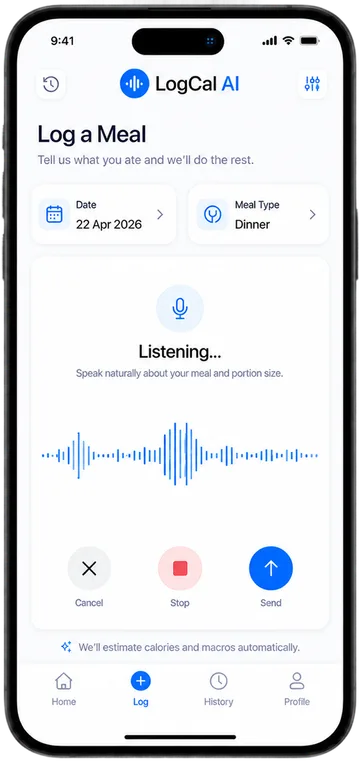
Rice bowl with beans, salad, yoghurt, and a spoon of olive oil.
This makes calorie tracking feel less like admin and more like a quick habit. You still need to be honest about portions, but you do not need to weigh every meal to get started.
Common Mistakes to Avoid
- Logging only the main food and forgetting oils, sauces, cheese, drinks, or dessert bites.
- Using tiny portions in your log when the portion was actually large.
- Forgetting snacks like biscuits, nuts, chocolates, or bites while cooking.
- Trying to be perfect instead of simply logging the next meal.
- Changing your estimating style every day, which makes your data harder to read.
Final Thoughts
You can track calories without weighing food if you use a consistent system. Start with portion estimates, include sauces and oils, take meal photos when useful, and log meals before you forget the details. For weight loss, the best way to track calories is usually the method you can repeat on normal busy days.
The goal is not to create perfect numbers. The goal is to understand your eating habits well enough to make better choices, then turn calorie tracking into a habit that feels easy to keep.
FAQ
Is calorie tracking without weighing food accurate?
It is less precise than weighing food, but it can still be useful. The goal is to estimate consistently, include key details, and notice patterns in your eating habits.
What is the easiest way to estimate calories?
Start by describing the meal clearly: food items, rough portions, cooking method, and extras like oil, cheese, sauces, or drinks. Photos can also help you remember portions.
Can I lose weight without weighing my food?
Many people can make progress without weighing food by tracking portions, eating consistently, and staying aware of calorie-dense extras. Weight loss needs vary by person, so speak with a professional if you need personal guidance.
Should I weigh food or estimate calories?
Use the method you can stick with. Weighing is more precise, but estimating is easier for restaurants, homemade meals, and busy days. A mix of both can work well.
How does LogCal AI estimate calories?
LogCal AI uses the meal details you provide through text, voice, or photos to create a calorie estimate. The more specific you are about portions and ingredients, the more useful the estimate can be.
Make meal logging easier
LogCal AI lets you track meals with text, voice, or photos, so calorie tracking can fit into real life.